
How to plan an exhibition stand in Egypt: the stages, cost drivers and a checklist
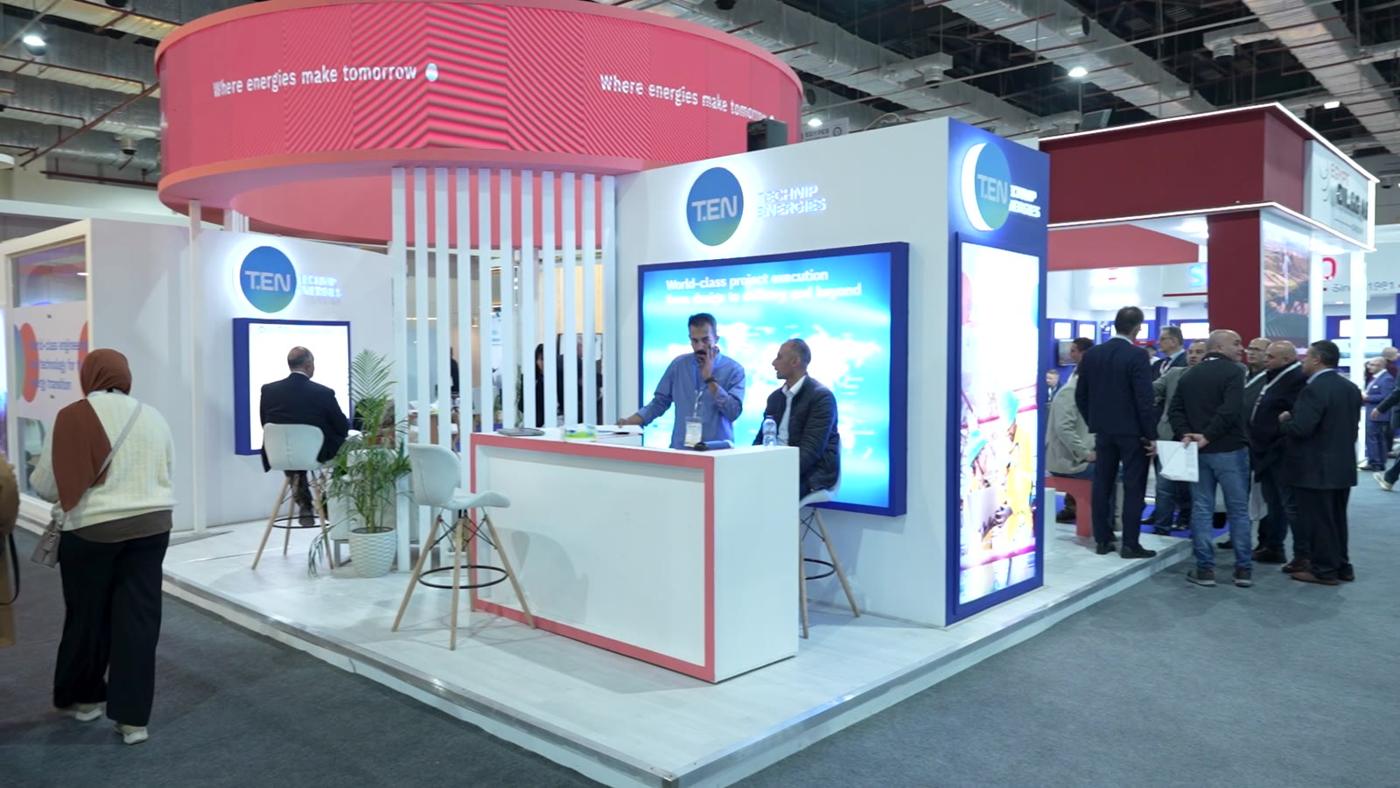
An exhibition gives you three or four days in a hall full of buyers, with your competitors a few metres away. The stand is what turns that footfall into conversations: it has to stop people in the aisle, give your team room to talk and make your brand look like the leader in its field. Most of that is decided before the show opens, in the plan.
This guide is what our booth production team walks new clients through before shows like Cairo ICT, EGYPES, AI Everything, Plastex and EgyBeauty Africa.
1. Start with the objective, not the design
Before anyone opens a 3D program, agree on what the stand has to achieve. A stand built for a product launch needs a stage or a reveal moment. One built for lead generation needs demo points, a quiet meeting corner and a fast way to capture contacts. A stand for brand presence needs height and a strong silhouette that can be seen from the far end of the hall.
Write down three things and share them with your stand builder: the main goal, the visitors you want to attract, and what your team will actually do on the stand each day. Every design decision follows from those answers.
2. The stages, and why timing is our job
Every custom stand goes through the same stages, working back from the opening day:
- Space and brief: the space booked with the organiser, the stand size and position confirmed, and the brief shared with your stand builder.
- 3D concept: design, photoreal renders and revisions until you sign off.
- Organiser approval: technical, electrical and safety drawings submitted and approved.
- Fabrication: the stand built in the workshop, graphics printed, screens, lighting and furniture prepared.
- Build-up: installation on site and handover before the doors open.
- After the show: dismantling, transport and, for reusable stands, storage.
How long each stage takes depends on your show and your date, not on a template. Some clients come to us months ahead; others come when the show is almost here. Either way, we adapt the plan to the time available, take responsibility for every deadline, from organiser approvals to build-up, and hit the ground running from the first call.
3. What drives the cost of a stand
Two stands of the same size can differ in price several times over. These are the factors that move the number most:
- Size and position: an island stand open on four sides needs finished walls and graphics all round; a corner or inline stand needs less.
- Custom or modular: custom stands are designed and fabricated for you; modular systems cost less per show and can be reused if you exhibit several times a year.
- Structure and height: arches, hanging rigs, double-decker areas and suspended rings (like the one on the Technip Energies stand at EGYPES) add engineering, materials and approval work.
- Screens, lighting and sound: LED walls and video screens are often the single biggest line after the structure.
- Finishes and graphics: wood, metal and acrylic, printed fabric, 3D letters and lightboxes.
- Furniture and storage: meeting tables, reception counters, display units and a lockable store room.
- Organiser and venue charges: space rental, power connection, rigging points and cleaning are usually billed by the organiser, separately from the build.
The best way to control cost is to decide early what matters most. If the stand is for demos, spend on screens and demo points and keep the structure simple. If it is for presence, invest in height and lighting.
4. Design for how visitors move
Good stands are planned around people, not walls. Keep the front open so visitors can step in without feeling committed. Put your strongest visual where it can be seen from the main aisle. Give demos their own space so a crowd doesn't block the entrance, and keep a quieter corner for serious conversations.
For ISYS at AI Everything we built a walk-through illuminated arch at the entrance. It became the most photographed spot in the hall, which meant visitors shared the brand for us.
5. Don't leave approvals to the end
Every Egyptian show has its own rules on height, rigging, fire safety and electrical load. Organisers ask for structural and electrical drawings before build-up, and late submissions are a common reason stands are delayed or changed on site. Your stand builder should prepare and submit these drawings for you.
6. Plan the content, not just the stand
A stand is a stage for your team and your message. Decide early what plays on the screens, which products are shown, and who presents at which times. Many of our clients also film the stand and the presentations; with the right plan, that footage becomes highlight films and social content the same week.
Your exhibition stand checklist
- Objective, target visitors and daily activities agreed
- Space booked; size, position and open sides confirmed
- Brief and budget range shared with the stand builder
- 3D design and renders signed off
- Technical drawings submitted to and approved by the organiser
- Screens, content and presentations planned
- Graphics files approved and sent to print
- Build-up, show-day support and dismantling scheduled
- Filming and photography booked
- Lead capture ready (forms, QR codes or a tablet)
Planning a stand?
Doers designs, builds and installs exhibition stands in Egypt and Saudi Arabia, from 3D concept and fabrication in our own workshops to LED, lighting, installation and dismantling. See our booth production work in Cairo or, for Saudi shows, our stand builders in Jeddah. If your stand is part of a wider launch, our event management team can run the whole programme. Tell us the show and stand size and we'll reply within one working day.