Case study: GalaxyAcad, web development for an exam preparation platform
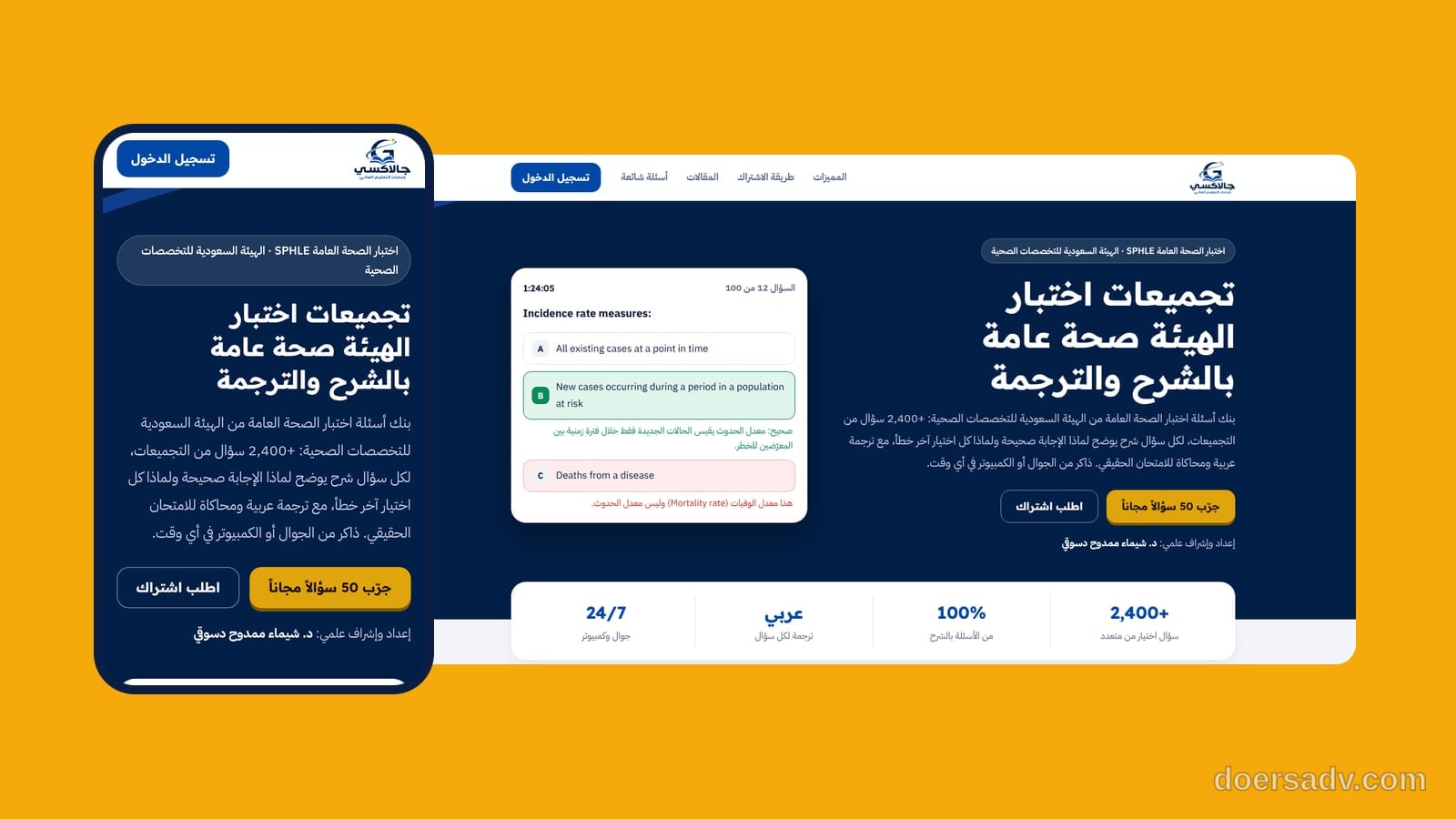
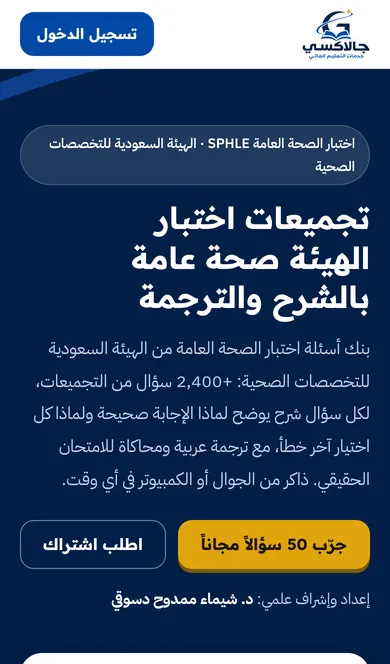
GalaxyAcad (جالاكسي) helps health professionals prepare for the Saudi Public Health licensing exam (SPHLE) of the Saudi Commission for Health Specialties. It is a question bank of more than 2,400 multiple-choice questions, each one explained and translated into Arabic, wrapped in study tools that turn reading answers into real preparation. This case study covers the brief, what we built and how it works under the hood. It's a good example of web development where the product is the learning experience itself.
At a glance
- Project: GalaxyAcad, an online exam preparation platform
- Link: galaxyacad.com
- What we did: product design, UX and UI, front-end and back-end development, the study engine, accounts and subscriptions, content protection, the admin side, SEO and launch
- Audience: Arabic-speaking candidates preparing for an exam set in English
- Platforms: any browser on phone or computer, no app to install
The brief
Candidates for the public health exam usually study from scattered collections of past questions, often as PDFs or chat screenshots, with no explanations and no way to know whether they are ready. The exam is in English, while most candidates think in Arabic. The client wanted one place where a candidate can understand every question, practise under exam conditions and see clearly how ready they are, on the phone they already carry.
The content also needed protecting. A question bank built with months of expert work is easy to copy and share, so the platform had to make that hard without getting in the way of honest students.
What we built
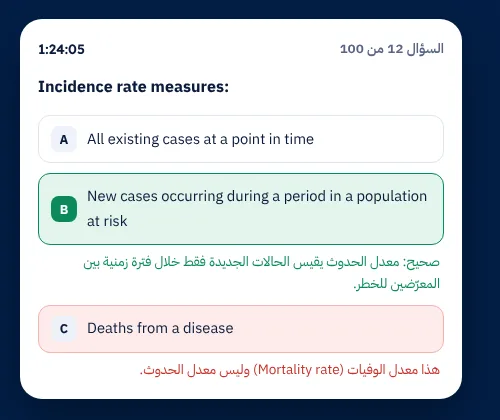
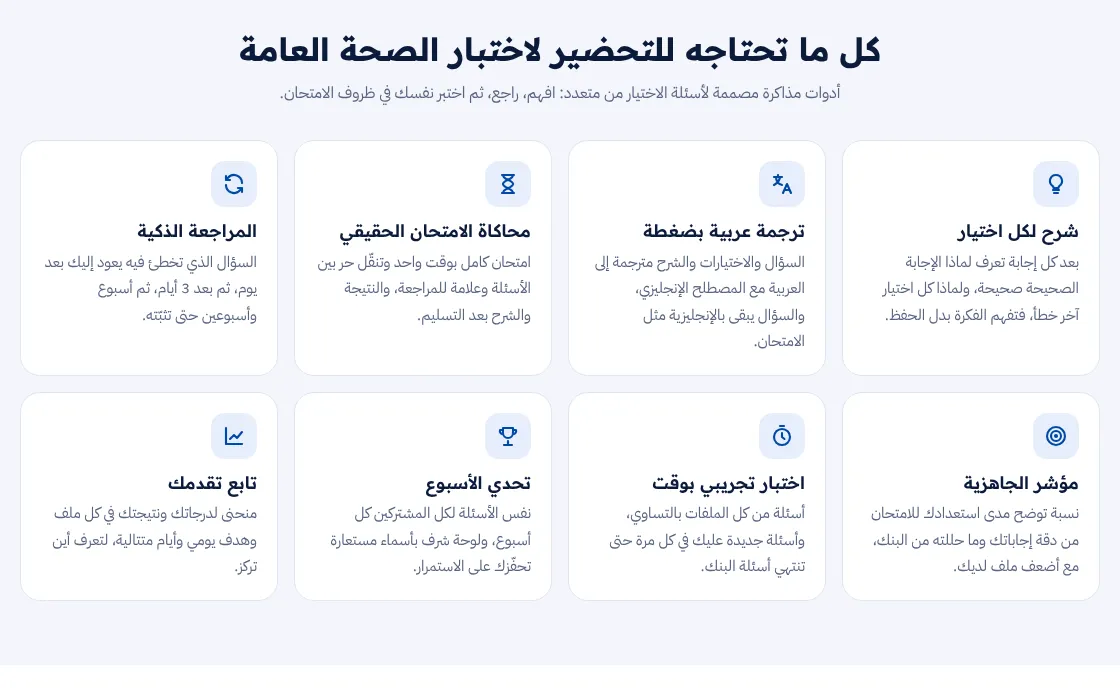
- An explanation for every option. After each answer the student sees why the correct option is correct and why each other option is wrong, so they learn the idea instead of memorising a letter.
- Arabic translation at a tap. The question, the options and the explanation can be shown in Arabic with the English term kept beside it, while the question itself stays in English, as it will be in the exam.
- Real exam simulation. A full timed exam with free navigation between questions and a flag for review; the score and explanations appear after submitting.
- Timed practice tests. Questions drawn evenly from every topic, always new to the student until the whole bank has been covered.
- Smart review. A question the student gets wrong comes back after a day, then three days, then one and two weeks, until it sticks.
- A readiness score. One percentage that combines accuracy and how much of the bank has been covered, with the student's weakest topic named.
- Progress tracking. A score chart over time, results per topic, a daily goal and a streak of study days.
- A weekly challenge. The same questions for every subscriber each week, with a leaderboard under nicknames to keep people going.
- A free trial without an account. 50 questions with full explanations and translation, so a candidate can judge the platform before paying.
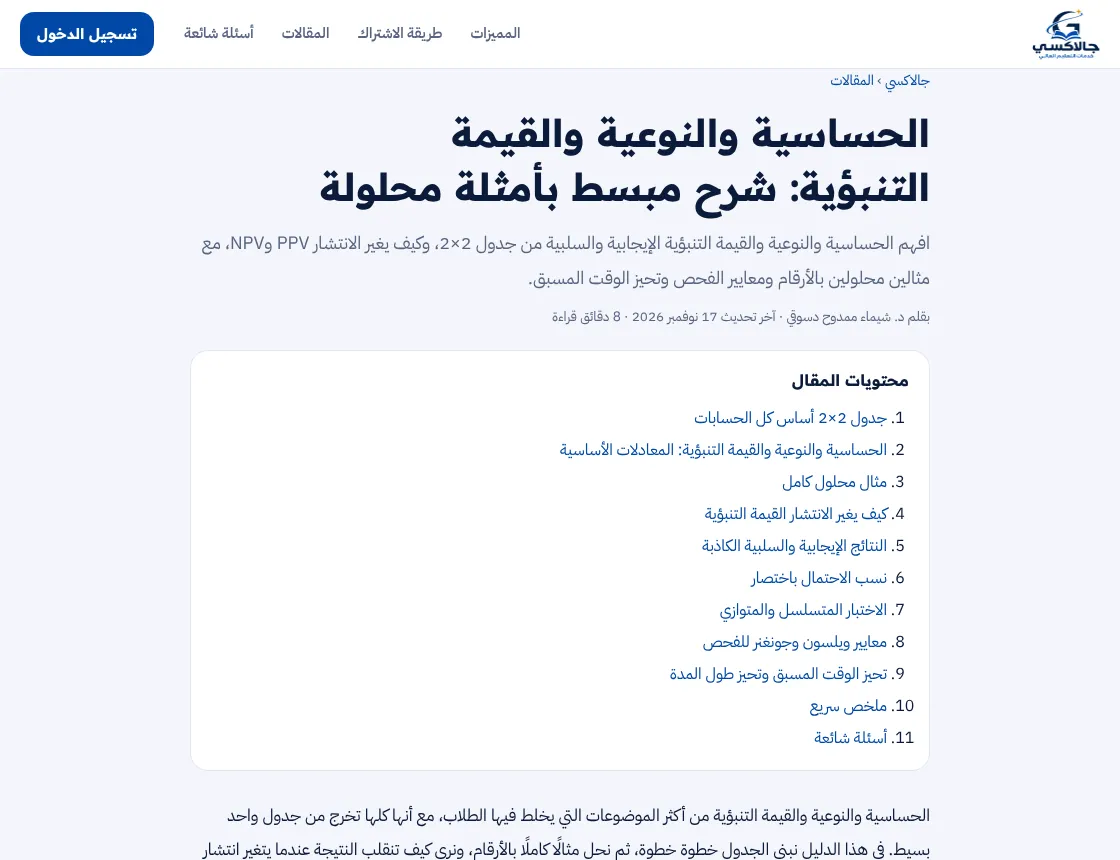
- A content library. Free study guides on the exam and its hardest topics, written to rank in search and bring candidates to the platform.
How it works: the technical side
A lean stack that loads fast on any phone
The platform is a server-rendered PHP application with a single JSON API behind it. Every action in the student app (answering, starting an exam, loading progress, requesting a subscription) is one call to that API. The front end is plain JavaScript with no framework: the whole student app is about 140 KB of script, it runs on older and mid-range phones, and there is nothing to install. Charts are drawn by our own lightweight code instead of a charting library, in the same spirit. Cloudflare sits in front of the site for speed and protection.
The study engine
Each answer is recorded against the question and its topic, which feeds everything else: the spaced review schedule (1, 3, 7 and 14 days after a mistake), the readiness score, the weakest-topic alert and the per-topic results. Practice tests are drawn evenly across topics and skip questions the student has already seen until the bank runs out. Progress trends compare the average of a student's latest full attempts with the attempts before them, so one lucky or unlucky test doesn't swing the picture, and the same rule is used on the server and in the browser so the numbers always agree.
Accounts, sessions and one device per subscription
Sessions use secure same-origin cookies, and every API call carries a CSRF token. Each browser gets its own device identifier, and an account can be active on one device at a time: logging in somewhere else ends the earlier session with a clear message. That keeps a subscription personal without asking the student for anything extra.
Content protection
On study pages, copying, printing and saving are blocked, and any attempt is reported to the teacher. A faint watermark with the student's name and number covers the screen, so a screenshot or a photo of the screen shows who took it; trial visitors get a watermark with the name and phone number they entered. Images and media are served through an authenticated endpoint rather than as public files, and the private parts of the application are kept out of search engines.
Subscriptions that fit how people pay
Candidates choose a plan (from 10 days to 3 months), pay by transfer and send the receipt from a button in the platform or on WhatsApp. They receive their login on WhatsApp, and the subscription period starts at the first login, not on the payment date, so nobody loses days by subscribing early. On the admin side, the teacher manages questions, subscriptions and reports in one place.
Arabic first, with English where it matters
The interface is right-to-left Arabic with fonts chosen for reading on screens, while questions keep their English text and medical terms, exactly as in the exam. Translations are attached to every question, option and explanation, so switching language never changes what is being tested.
Built to be found
Search engines see a fast landing page, a set of in-depth study guides in Arabic and a sitemap, while the app, the API and private data are excluded from crawling. The guides answer the questions candidates actually search for, such as how the exam works or how to read sensitivity and specificity, and lead them to the free trial.
The result
Candidates get a single place to prepare: every question explained, every explanation available in Arabic, practice that adapts to their mistakes and a clear answer to the question that matters most, "am I ready?". The client gets a platform that protects its content, handles subscriptions in a way that suits its market, and grows its audience through search.
What this means for your project
Whether you're building an e-learning platform, a member area or any product people use every day, the same principles apply:
- Design around the user's real goal (here, "am I ready for the exam?"), not around a feature list.
- Keep the stack as light as the product allows; it pays off on every phone.
- Protect valuable content without punishing honest users.
- Fit payments and onboarding to how your customers actually pay and communicate.
- Give search engines something worth ranking, and keep private parts private.
Planning a platform or a web app? Our web development team in Cairo would be happy to talk it through. You may also like our Tafsir al-Shaykhayn case study and our guide to what a website costs in Egypt.