How much does a website cost in Egypt? What decides the price and how to compare quotes
Ask five companies in Egypt to quote for "a website" and you can get five very different numbers. That rarely means one is cheap and another is overcharging. It usually means each one is pricing a different website: a template with your logo on it, a custom corporate site, or a platform with payments and a dashboard. This guide explains what decides the cost of web development in Egypt, what each level of work should include and how to compare quotes fairly.
First, what kind of website are you buying?
"Website" covers very different products. Being clear about which one you need is the biggest factor in the price.
- Landing page: one focused page for a campaign, a launch or an event, built to turn visitors into leads.
- Company website: a few pages that explain who you are, what you offer and how to contact you. Most businesses start here.
- Content-heavy website: a site built around a lot of content, such as a news section, a knowledge base, a project catalogue or a library. Structure and search matter more than visuals here.
- Online store: products, cart, checkout, payments, shipping and stock.
- Web application or platform: accounts, dashboards, bookings, workflows or integrations with your internal systems.
What decides the cost of a website in Egypt
1. The number of page types, not the number of pages
A site with 200 product pages can cost less than a site with 10 pages if all products share one layout. What takes time is each type of page that needs its own design and logic: home, service, product, article, booking, account. Count the templates, not the pages.
2. Template or custom design
A ready-made theme is faster and cheaper, and fine for a simple presence. Custom UX and UI design starts from your audience and your goals: research, structure, wireframes, then a design system that fits your brand. It costs more, and it is usually what makes a site convert, load fast and stay easy to grow. If your brand identity isn't ready yet, it's worth doing that first, because the website is built on it.
3. Arabic, English or both
A bilingual site isn't just a translated one. Arabic needs a proper right-to-left layout, Arabic fonts that read well on screens, and checks on every page in both directions. It also needs content written for each language, not copied word for word. Plan for it from the start; adding a second language later costs more.
4. Features and integrations
Every feature that does something adds to the build: booking, search, filters, member areas, forms that feed your CRM, links to an ERP or stock system. Online payments are their own item: connecting a local Egyptian gateway (for example Paymob or Fawry), cards and wallets, plus testing refunds and failed payments. Make a list of what the site must do, not only what it must show.
5. Who updates the content, and how
If your team will update the site, it needs a content management system set up for the way you work, with the right fields and permissions, and a short training session. A site that only the developer can update looks cheaper at the start and costs more over the years.
6. Speed, SEO and security
These are invisible in a design mock-up and decide whether the site works. Fast loading on mid-range phones, clean structure for search engines, correct titles and descriptions, analytics, SSL, backups and protection against common attacks all take time. A quote that leaves them out isn't cheaper; it just moves the cost to later. Ask how the site will be found, and whether SEO is part of the build or a separate project.
7. Content and media
Someone has to write the pages, take or source the photos, and produce any video. If you have it ready, the build is faster. If not, include copywriting and photography in the plan, or the launch will wait for content.
8. Hosting, running costs and support
After launch, a site needs a domain, hosting, an SSL certificate, backups, updates and someone to call when something breaks. Some of these are yearly costs, some are monthly. Ask what is included, for how long, and what maintenance costs after the support period ends.
9. Timing
A fixed launch date (a product launch, an exhibition, a season) changes how a project is staffed. A realistic timeline agreed at the start, with clear approval points, keeps the cost under control better than a rush at the end.
How to compare website quotes
Before comparing totals, make sure the quotes describe the same website. Ask each company:
- Which page types and features are included, listed one by one?
- Is the design custom or based on a theme? How many design rounds and revisions?
- Arabic, English or both? Who writes and translates the content?
- Which payment gateways and integrations, and who pays their fees?
- Is SEO set up (titles, structure, sitemap, analytics), and how is speed tested?
- Who owns the domain, the hosting account and the source code at the end?
- What support is included after launch, for how long, and what does maintenance cost after that?
- Can we see live websites you built and talk about how they were made?
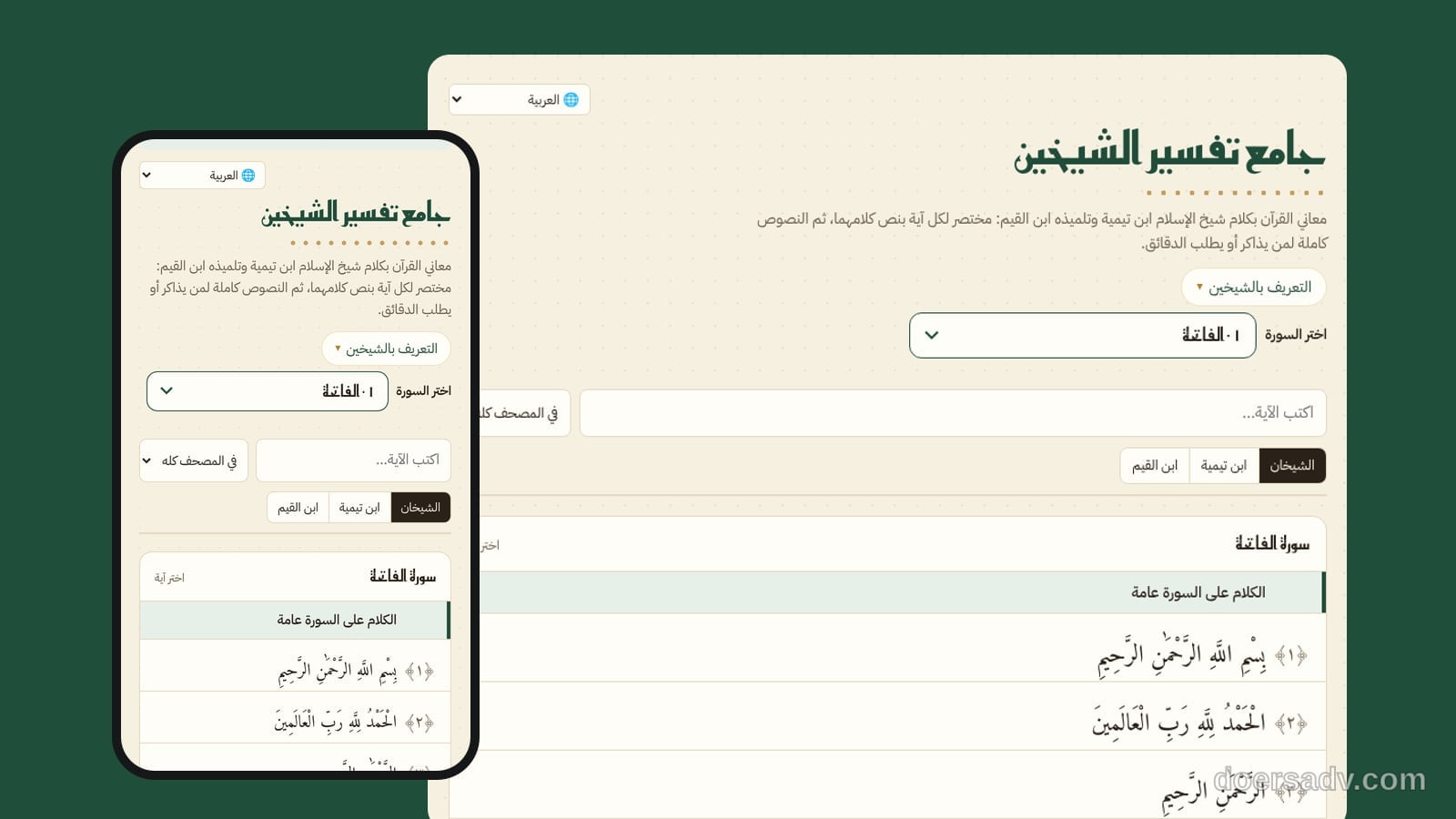
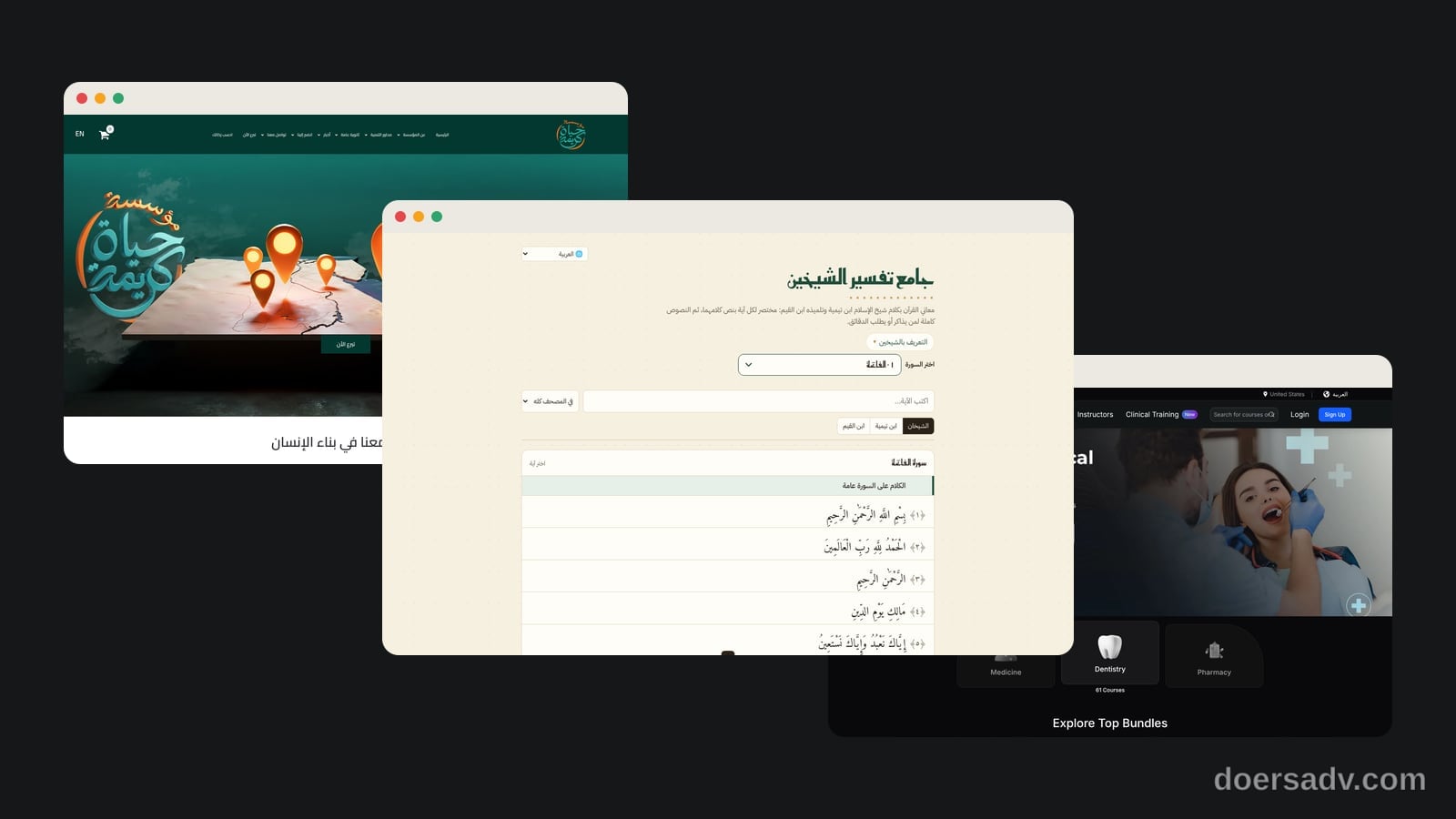
The last question matters most. A portfolio of live sites you can open and use tells you more than any proposal. Ours are listed on our web development page, and we've written up one large project in detail: the Tafsir al-Shaykhayn case study.
Where the website fits in the total budget
The website is only half of the investment. Visitors don't arrive on their own: they come from search, digital campaigns, social media and offline advertising. Keep part of the budget to bring people to the site and to improve it based on what they do. A modest site with steady traffic and regular improvements usually beats an expensive site that nobody visits.
Frequently asked questions
Can we start small and grow the site later?
Yes, and it's often the smartest route. Launch with the pages and features that matter most, built on a structure that can grow, then add sections and features as you learn what your customers use.
How long does a website take?
It depends on the type of site, the features and how quickly content and approvals come in. We agree the launch date with you at the start, plan backwards from it and take responsibility for hitting it.
Should we own the domain and hosting?
Yes. The domain and the hosting account should be in your company's name, with access shared with the agency. It protects you if you ever change suppliers.
Is WordPress enough, or do we need custom development?
For many company sites a well-built WordPress site is the right answer. Custom development makes sense when you need things a CMS does badly: heavy content, complex search, platforms, apps or unusual integrations. A good agency recommends the simplest option that does the job.
Looking for a web development company in Egypt?
Doers builds websites, online stores, web apps and mobile apps in Cairo, Arabic-first and ready in English, with more than 80 projects delivered across Egypt and the region. Tell us what the site needs to do and when it needs to launch, and we'll send a clear proposal that lists exactly what is included. Learn more about our web development work. Whatever your deadline, we adapt, take responsibility and hit the ground running.